 Mon – Fri: 07:00 AM – 05:30 PM
 2880 Acton Road Suite A Birmingham, AL 35243
 (205) 380-2884
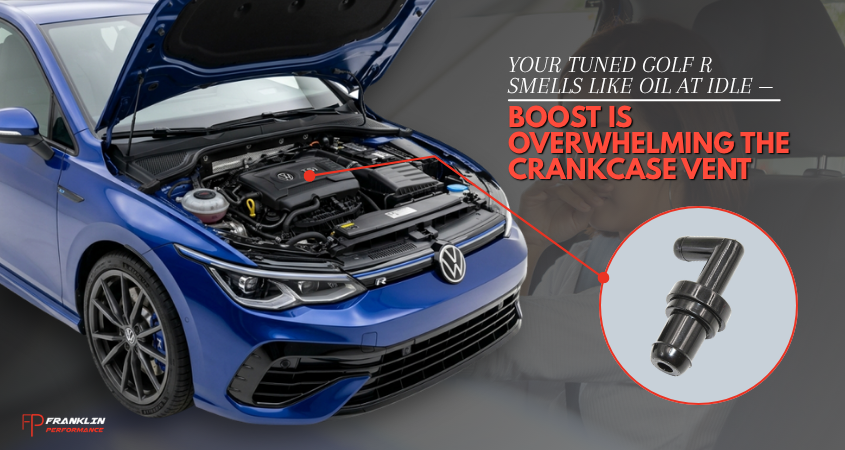
Every boosted engine leaks a little combustion pressure past the piston rings into the crankcase. Stock, the factory PCV system handles it. Add a tune, a bigger turbo, a downpipe and real cylinder pressure, and that system starts losing the argument — more boost means more blow-by, and blow-by has to go somewhere.
Where it goes is your intake tract, your oil, and eventually your seals. Franklin Performance builds tuned VW, Audi, BMW and Porsche cars at 2880 Acton Road, and this is the maintenance conversation that separates a build that lasts from one that starts weeping oil in its second season. Worth having now, before autumn track days and cool-morning starts.
Quick Summary: Key Takeaways
- Blow-by scales with power: higher cylinder pressure pushes more gas past the rings, so a tuned engine ventilates more than a stock one.
- Oil vapour ends up in the intake: on a direct-injection engine there’s no fuel wash on the valves to clean it off.
- Crankcase pressure attacks seals: a restricted breather system will find the rear main seal, the dipstick tube or a valve cover gasket.
- Symptoms are subtle first: oil smell at idle, a whistle, rough idle after a hard pull, slowly rising oil consumption.
- Check it with the boost work: crankcase pressure belongs on the list any time turbo, supercharger or intake hardware changes.
Blow-by is normal — the volume is what changes
Piston rings seal well. They don’t seal perfectly. A fraction of every combustion event pushes past them into the crankcase, and the PCV system exists to pull that vapour back into the intake and burn it.
Raise peak cylinder pressure with a tune and the leakage rate goes up with it, so the same factory breather plumbing that was comfortable at stock output is now working at the edge of its capacity, especially at high load where boost pressure fights the flow direction the system was designed around. Nothing is broken. The demand simply moved.
What excess crankcase pressure actually damages
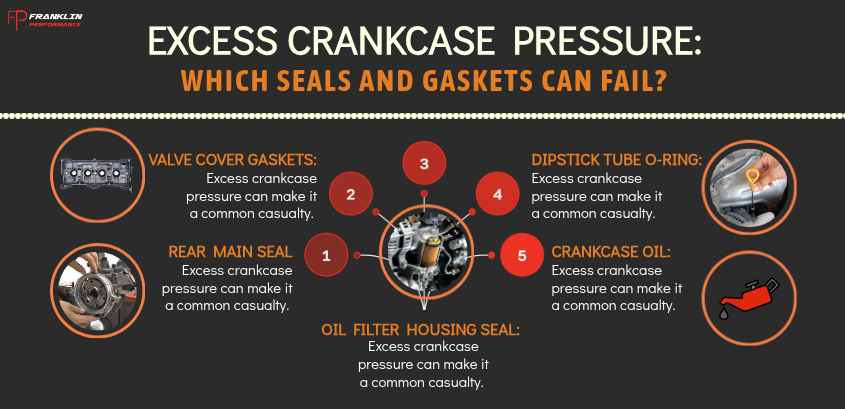
Pressure takes the path of least resistance. On these engines that means seals and gaskets, in a fairly predictable order.
The rear main seal is a common casualty, followed by valve cover gaskets, the oil filter housing seal and the dipstick tube O-ring. Push hard enough and you can blow oil out of the crankcase entirely — owners describe finding oil misted across the underside of the hood or a puff of smoke at shutdown. A car that leaks oil only after hard driving is telling you it has a ventilation problem, not a seal problem.
Direct injection makes the intake side worse
Oil vapour that gets recirculated lands on the back of the intake valves. On a port-injected engine, fuel spray keeps them washed. On a direct-injection engine, nothing does.
So the deposits bake on, and over tens of thousands of miles they change the shape of the port and disturb airflow — which is precisely the thing you paid to improve. Rough cold idle, a slight misfire after a long highway pull, and a car that feels lazier than the dyno sheet says it should are all consistent with this. It builds slowly, which is why it surprises people.
Superchargers change the pressure picture too
Positive-displacement blowers put a different demand on crankcase ventilation than a turbo does, because manifold pressure is present across a much wider slice of the rev range.
A breather routed to a source that is under boost most of the time cannot do its job, and that is the detail that gets missed when hardware is bolted on without a look at how the crankcase actually breathes. We’d rather sort the plumbing than warranty a seal. Repair prices are not getting friendlier either — motor vehicle maintenance and repair costs rose 6.6% over the 12 months ending July 2026, per the U.S. Bureau of Labor Statistics.
How we check crankcase pressure on a build
It’s a measurement, not an opinion. We check crankcase pressure at idle and under load, and we look at where the breather lines terminate.
Then we inspect the intake tract for oil film, read the plugs, and look at the seals that fail first on that specific engine. Our technicians are VW and Audi Master certified with decades on these platforms, and we stock parts through the vendors we carry — APR, AWE, Dinan, ECS Tuning, H&R, Integrated Engineering, Milltek and Unitronic among them. If your car needs different hardware, ask us what we can source.
Frequently Asked Questions
Q: Why does my tuned car smell like oil at idle?
A: Usually because crankcase vapour is escaping somewhere it shouldn’t — a stressed valve cover gasket, a breather hose, or oil vapour reaching hot exhaust components. Higher blow-by from a tune makes it more likely. Have the crankcase pressure measured.
Q: Does a tune increase blow-by?
A: Yes, indirectly. A tune raises cylinder pressure, and higher cylinder pressure pushes more gas past the piston rings. The engine is fine; the factory ventilation system is simply handling more volume than it was designed for.
Q: Can crankcase pressure cause an oil leak?
A: It’s one of the most common causes we see. Excess pressure forces oil past seals that would otherwise hold, so replacing the seal without addressing the pressure just resets the clock on the same leak.
Q: Why do direct-injection intake valves get dirty?
A: Fuel is injected straight into the cylinder, so it never rinses the intake valves. Oil vapour from the crankcase settles there instead and cooks into carbon. Boosted, tuned engines circulate more vapour, so it accumulates faster.
Talk to Franklin Performance in Birmingham before the next power step
Planning a turbo, a blower or the next stage this autumn? Bring the car in and let us look at how it breathes first. Power is easy. Keeping it healthy takes the boring checks.
Hours: Mon–Fri 7:00 AM – 5:30 PM; Sat–Sun closed
Website: franklin-performance.com