 Mon – Fri: 07:00 AM – 05:30 PM
 2880 Acton Road Suite A Birmingham, AL 35243
 (205) 380-2884
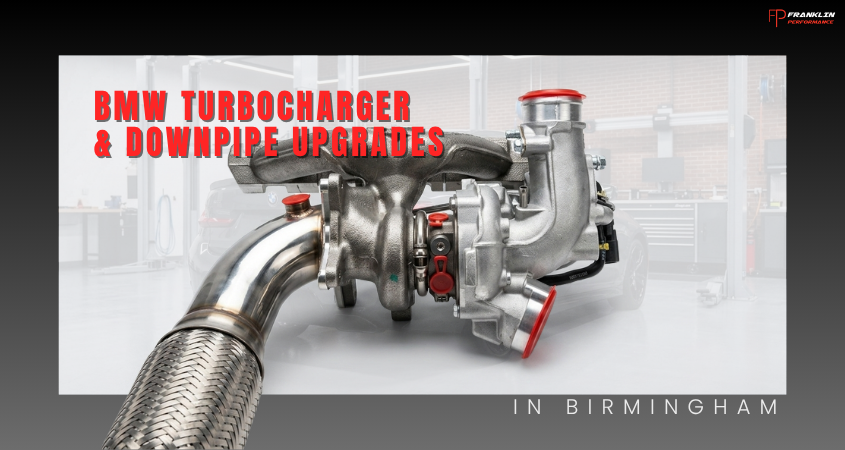
A turbocharged BMW is a tuner’s dream because a few smart parts wake up real power. Swap the restrictive factory downpipe, add a tune, and an N54 or N55 feels like a different car. That’s the appeal. But there’s a right way and a wrong way to build a fast, reliable BMW in Birmingham, and the difference comes down to parts choice, tuning, and who does the work.
Forced induction is efficient by design. The U.S. Department of Energy points out that turbocharging lets a smaller engine produce the power of a larger one while burning less fuel, which is why nearly every modern BMW runs boost. The trick is unlocking more of what the turbo already can do without cooking the engine.
Quick Summary: Key Takeaways
- Start with the downpipe: A high-flow downpipe frees the most trapped power on turbo BMWs like the N54, N55, and B58.
- Tune it or skip it: A downpipe without a supporting tune throws codes and leaves horsepower on the table.
- Catted for the street: High-flow catted downpipes keep a daily-driven BMW cleaner; catless is off-road and track use only.
- Stage matters: Stage 1 is a tune alone, while Stage 2 adds a downpipe and intake for the bigger jump.
- Fueling limits: The N54’s high-pressure fuel pump can bottleneck big power and may need attention on aggressive builds.
A downpipe and tune unlock the most power on a turbo BMW
If you want more from a turbocharged BMW, the downpipe and tune are where the value lives. The factory downpipe carries a restrictive catalytic converter that chokes exhaust flow, while a high-flow unit lets the turbo spool faster and breathe. Pair it with a tune. On an N54 or N55 335i, a downpipe plus a Stage 2 calibration can add roughly 15 to 30 horsepower and a much stronger midrange, and it changes how the car pulls out of a corner on the climb up US-280. You feel it immediately.
The signs your BMW is ready for bolt-ons are simple
You don’t need a broken car to upgrade, you need a plan. Most owners come in wanting more midrange, faster spool, and a better exhaust note from an otherwise healthy N55 or B58, and some already have a tune and want the downpipe to match. Timing matters. If your BMW is throwing boost or fuel-trim codes, we fix the mechanical health first, because bolting power parts onto a car with a leaking charge pipe or a weak fuel pump just hides the real problem. Health first, power second.
Downpipe choices come down to catted, catless, and legal use
Here’s where honesty matters more than horsepower. Catless flows best. It also costs least, strips the emissions equipment, and is legal only for off-road or track use, not a daily-driven car in Alabama. High-flow catted units keep the catalytic converter, stay street-friendlier, and still free most of the gains. We recommend catted. Anyone who tells you a catless setup is fine for your commuter is selling parts, not giving advice, and that distinction protects both your engine and your ability to pass inspection.
Skipping the tune or the fueling turns power into problems
The fastest way to ruin a good build is to cut corners on tuning. A downpipe changes exhaust flow and oxygen readings, so without a matching tune the BMW logs faults and can run lean. Fuel is the ceiling. On the N54 especially, the high-pressure fuel pump and injectors can’t always feed big power, and pushing past their limit causes misfires and long-term wear. Balance is everything. We size the tune to the hardware and your goals, whether that’s a smooth Stage 1 daily or a full bolt-on N55 that still starts every morning.
Franklin Performance builds BMWs with the right hardware and tuning
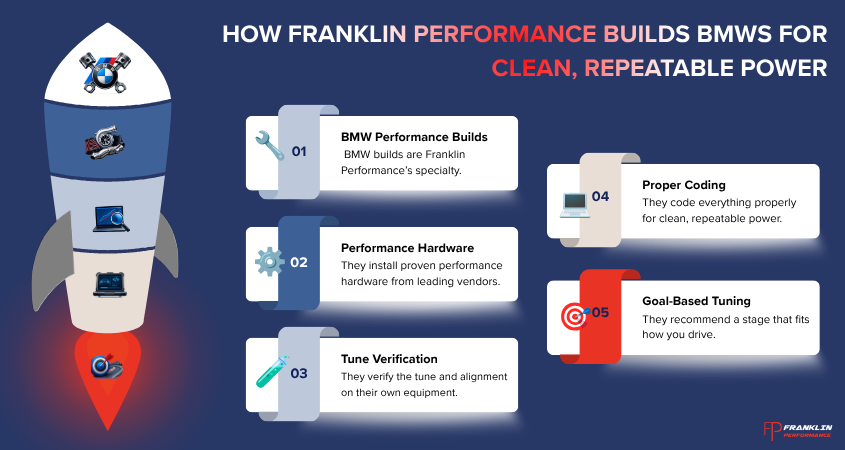
We’re the performance arm of a Birmingham import shop, and BMW builds are our lane. Working out of Acton Road, our VW and Audi Master-certified techs install downpipes, intakes, and turbo hardware from vendors like Dinan, APR, Milltek, and Integrated Engineering, then verify the tune and the alignment on our own equipment. No parts-cannon guesswork. We talk through your goals, recommend a stage that fits how you actually drive, and code everything properly so your BMW makes clean, repeatable power.
Frequently Asked Questions
Q: How much horsepower does a downpipe add to a BMW?
A: On a turbo BMW like the N54 or N55, a high-flow downpipe paired with a tune typically adds around 15 to 30 horsepower, plus stronger midrange and quicker spool. The tune does the work. A downpipe alone adds little and can trigger codes.
Q: Are catless downpipes legal in Alabama?
A: Track use only. Catless downpipes remove emissions equipment and aren’t meant for street-driven cars. For a daily BMW we recommend a high-flow catted downpipe, which keeps most of the power while staying street-friendlier.
Q: Do I need a tune with a BMW downpipe?
A: Yes. A downpipe changes exhaust and oxygen-sensor readings, so a matching tune is what actually delivers the power and keeps the engine running correctly. Installing one without a tune usually throws a check-engine light.
Q: What is Stage 1 versus Stage 2 on a BMW?
A: Stage 1 is a software tune on stock hardware. Stage 2 adds bolt-ons like a downpipe and intake with a revised tune, producing a bigger and more reliable gain when the supporting parts are in place.
Plan your BMW build with a Birmingham performance shop
Ready to add real, reliable power to your turbo BMW in the Birmingham area? Tell us your goals and we’ll spec the right downpipe, tune, and supporting parts. Book an appointment online to get started.
Franklin Performance — 2880 Acton Road Suite A, Birmingham, AL 35243
Hours: Mon–Fri 7:00 AM–5:30 PM; Sat–Sun Closed
Website: franklin-performance.com